
The Return of the "Warm Kitchen": Why Nature-Inspired Wood Stains are Overtaking All-White Cabinets
For the better part of a decade, the recipe for a trendy kitchen was simple: stark white shaker cabinets, bright quartz countertops, and minimalist hardware. It was clean, bright, and safe. But lately, we’ve noticed a major shift in what Wisconsin homeowners are asking for.
People are moving away from the cold, sterile look of all-white kitchens. Instead, they want spaces that feel cozy, inviting, and deeply connected to the beautiful landscapes outside their windows.
The "Warm Kitchen" is officially back—but it doesn’t look anything like the heavy, dated kitchens of decades past. Here is a look at why natural wood stains are making a massive comeback, and how to bring this trend into your home without losing that fresh, modern feel.
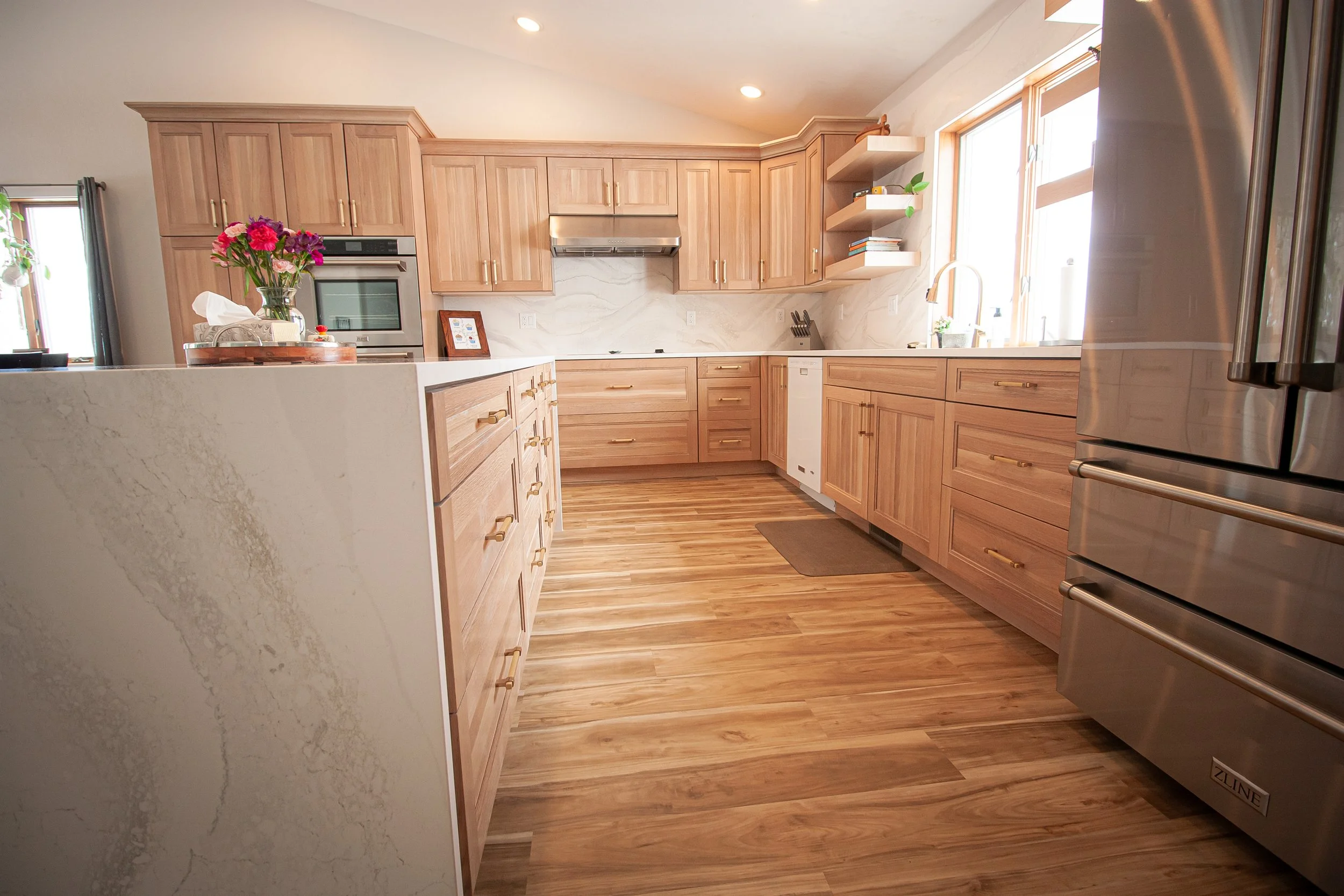
1. Reimagining the Stained Kitchen (Goodbye, '90s Honey Oak)
When some homeowners hear "stained wood cabinets," they immediately flash back to the high-gloss, orange-toned honey oak kitchens of the 1980s and 90s.
Today’s wood trend is entirely different. The modern aesthetic relies on flat, matte finishes and light-to-medium tones that let the wood’s natural character shine through without looking dark or heavy. We are seeing incredible demand for:
White Oak: Known for its straight, clean grain patterns and neutral undertones, it brings a bright, high-end architectural feel to a room.
Natural Walnut: A richer, darker option that offers stunning color variations from chocolate brown to honey gold.
Rift-Sawn Cuts: A specific way of milling the log that produces a remarkably linear, modern grain pattern, minimizing the busy "cathedrals" or arches often seen in traditional wood cabinetry.
2. Bringing the Northwoods Indoors
There is a reason this trend feels so right for Northern Wisconsin. Whether your home sits right on the lake or tucked into the woods, a kitchen should feel like an extension of its environment.
Using natural wood grains anchors the home. When you pair a beautifully stained island with large windows overlooking a lake or a forest, the kitchen doesn't compete with the view, it complements it. It creates a seamless transition from the rugged beauty of the outdoors to the refined comfort of your home.
3. The Best of Both Worlds: The Two-Tone Strategy
If you love the warmth of wood but are still afraid a fully stained kitchen will feel too dark, you don't have to choose just one. The two-tone kitchen is a spectacular compromise that adds instant architectural interest.
A popular, timeless layout involves painting your perimeter wall cabinets a soft, creamy off-white or a deep nature-inspired hue (like a muted forest green or charcoal) and using a rich, stained wood for the kitchen island. This creates a striking focal point and allows the craftsmanship of the wood grain to stand out as a piece of custom furniture.
4. Why Custom Craftsmanship Matters for Wood Stains
With painted cabinets, a thick coat of primer and paint can sometimes mask minor imperfections in the underlying material. Wood stains offer nowhere to hide.
Every single grain pattern, knot, and seam is visible. That is why mass-produced, big-box store cabinets often look patchy or cheap when stained—they are made from mismatched pieces of low-grade wood or particleboard with thin veneers.
Ready to Warm Up Your Space?
Trends come and go, but the warmth, durability, and texture of real, high-quality wood never truly goes out of style. If you’re ready to move past the all-white kitchen and design a space that feels uniquely yours, we’d love to help you bring your vision to life.
Stop by our showroom or get in touch today to look at our latest stain samples and explore what’s possible for your home.
