
Earthy Greens Meet Natural Stains: A Masterclass in Northwoods Contrast
For years, the design world told us that kitchens had to choose a side. It was either the stark minimalism of an all-white space or the heavy, monochromatic look of all-wood cabinetry. But as we move through 2026, the most captivating homes are breaking the rules entirely. They are inviting the outside in, combining textures, and proving that you don't have to settle for just one finish to create a cohesive design.
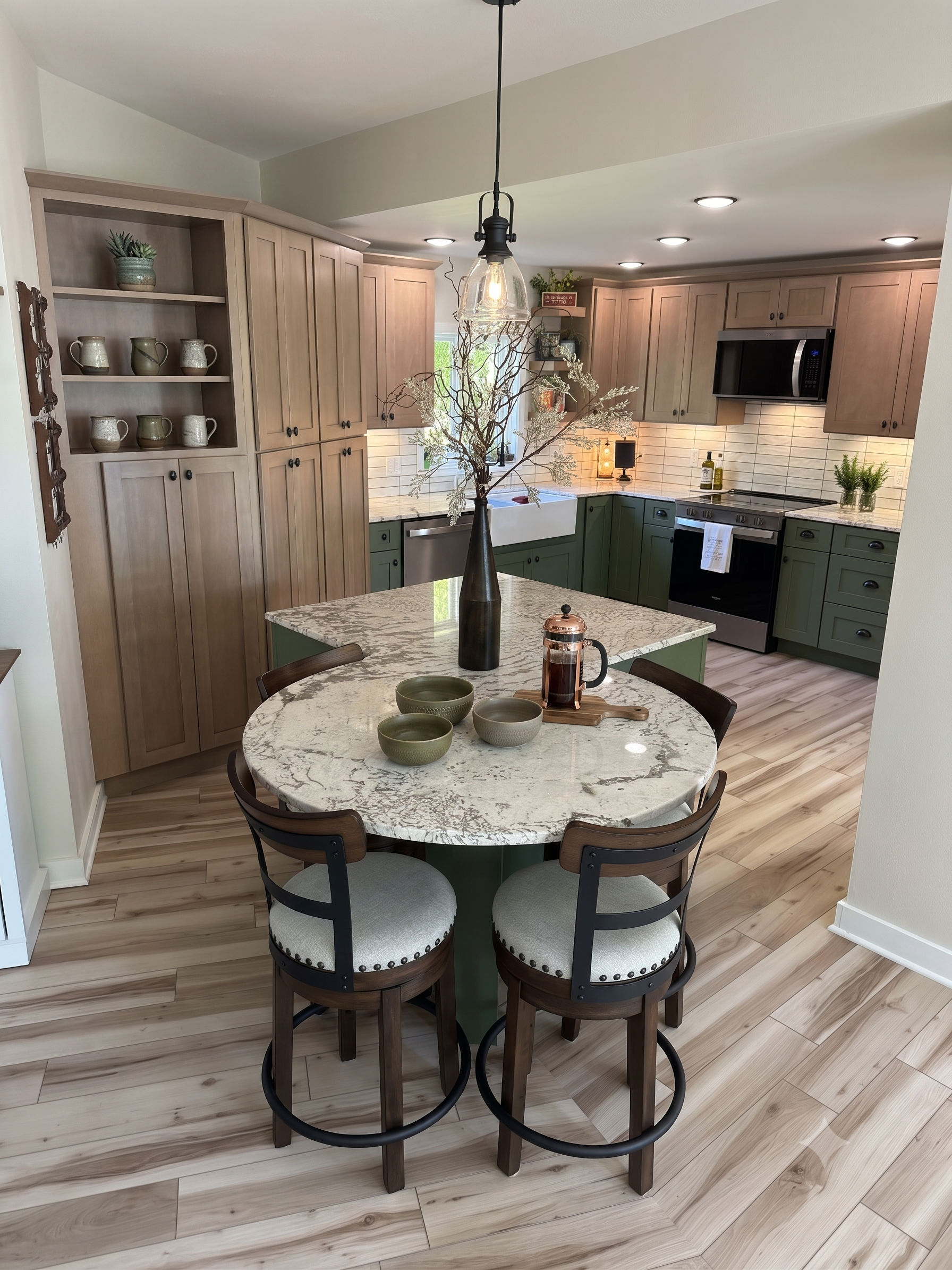
Look no further than one of our recent projects to see this philosophy in action. By beautifully balancing rich, organic green with the timeless warmth of naturally stained wood cabinetry, this space serves as a masterclass in high-contrast harmony.
Here is how you can pull off this trend-setting look in your own Northwoods home.
1. Grounding the Space with Earthy Greens
When working with a split-finish kitchen, color placement is everything. In this design, a deep, muted sage green anchors the lower perimeter cabinets and the central island.
Green acts as "nature's neutral." Because our eyes are so accustomed to seeing it outdoors, a rich green finish doesn't overwhelm the senses. Instead, it provides a solid, grounding visual base for the room. Utilizing a bold yet organic color on the lower half of the room allows the island to stand out as a true focal point, echoing the vibrant pine and balsam forests right outside the window.
2. Elevating with Warm, Stained Wood Uppers
If the entire kitchen had been painted green, the room might have felt enclosed; if it were entirely wood, it could risk feeling heavy. The magic happens in the contrast.
By placing light, nature-inspired wood stains exclusively on the upper cabinetry and floating shelves, the upper half of the kitchen remains bright, airy, and open. The delicate, visible grain of the wood uppers brings an immediate layer of authentic warmth to the space. Notice how the wood tones catch the light from the windows, perfectly complementing the soft, cream-colored backsplash tile to create a texture-rich environment that feels modern yet deeply cozy.
3. Tying It Together: The Supporting Elements
When you mix a distinct paint color with a natural wood stain, you need "bridge elements" to ensure the two distinct choices feel intentional and connected. This kitchen achieves that harmony through three smart design choices:
The Countertops: The dynamic, heavily veined stone countertops act as the ultimate unifier. The swirling patterns pull together the crisp whites of the farmhouse sink, the creams of the backsplash, and the deeper tones of the room.
The Flooring: The multi-tonal wood-look flooring mimics both the lighter tones of the upper cabinetry and the darker grain accents, weaving the color palette from the ground up.
The Black Accents: Industrial matte black accents—seen in the cabinet hardware, the underlying frames of the upholstered bar stools, and the statement pendant lights—puncluate the space. They add a crisp, modern edge that prevents the organic elements from feeling too rustic.
Bring the Trend Home
Your kitchen is more than just a place to prep meals; it’s the gathering hub of your home. Mixing finishes allows you to move away from cookie-cutter designs and craft a space that feels uniquely tailored to your lifestyle, full of texture, and deeply welcoming.
Ready to explore how custom colors and natural stains can transform your home? Stop by our Chetek showroom today, or contact us to start collaborating on your next project!
